Bio
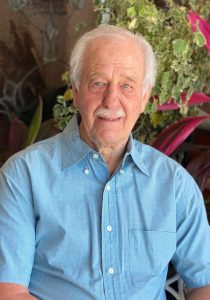
Theodore Orenstein was born in 1943. As a child, he took seriously what he was taught in religious school. He dutifully listened to the stories and directives. In junior high school as he and the other students recited prayers at the beginning of each school day, he considered them deeply.
Later in his teens he acquired a cynicism about religion. He saw people going through the motions, reading prayers about a God to which he could not relate, and listened to Bible stories which he could not believe. In college he saw myself as an avowed atheist. He loved to debate the issue with believers and discuss it with all others. He rejected the humanoid God spoken of in the Bible.
After attending college and law school, he was drafted into the U.S. Army in 1967 during the Vietnam War. In the army he read The Science of Being and Art of Living by Maharishi Mahesh Yogi. The book tried to describe a transcendent consciousness, but Ted just didn’t get it. It spoke in glowing terms about a state of existence, but it was so vague he could not understand it. It is therefore very important to him that his book be easy to understand by the ordinary unenlightened person.
In the middle of the night a few days after going Christmas caroling in December 1969, as Ted was studying for his upcoming bar exam with the words of the Christmas carols still in his subconscious mind, it struck him with no warning what Christ meant when he said ”Do unto others as you would have them do unto you”. We are all connected through human love. We all have faults. We should not criticize others for their faults just as we would not want them to criticize us for ours. When we hurt others, we hurt ourselves. It was at that moment that he first truly recognized the shining spirit behind those words.
His life was fundamentally changed at that moment. He spread that word of unity to his family and friends. He was elated and calm; amazed and filled with quiet contemplation. Everything came together. Everything was understood.
Revelations kept coming to him in the two years following that moment. He noticed occurrences hinting of spirituality which he would have previously walked by and ignored. They connected with something in him. He was ready. He was like a blossoming flower. It was during a revelatory experience he had about that time that he realized that he existed beyond his physical and mental body. He was a spirit which resided in his body in order to exist in and interact with the physical world.
It was soon thereafter that without warning a fundamental spiritual awakening came over him. It was a wondrous revelatory experience within which he felt a direct connection with the source of life. While within it he understood all. It left after about 36 hours, but the lessons learned from that experience stayed with him.
Soon after that he met his first spiritual teacher in a casual conversation while passing on the sidewalk. He invited Ted to visit his home where he lived with his wife and young daughter, and Ted soon did. Every night people gathered around that wise man and they had deep probing discussions about the nature of life, of meaning, and of the nature of understanding itself. The enlightening realization of the true meaning of life returned to Ted, but this time it was even greater. With it came the revelation as to the fundamental meaning of existence itself. It is described in great depth in his book.
He was immersed within that heavenly experience for about three weeks. During that time he developed a concept of the nature of our existence in this earthly world and how it could be communicated to others. That is the teaching contained in his book Awaken Your Soul: How to Find Your Inner Spirit and Life’s Purpose.
In 1970 Ted, newly sworn-in as a lawyer, sublet a small office from an older practitioner and started his own law practice with only two clients. In those days law schools offered no practical courses on how to start or run a law practice, or how to get clients. Ted had to learn that from scratch, often by trial and error. In 1973 he attended a bar association meeting and suggested to the group that the bar association should educate new lawyers about how to start and run their own practices. The chairperson of the meeting said: “Good idea. You’re in charge.”
Ted was appointed co-chair of a newly-formed education committee. He then established a series of free “How to” educational seminars. He also began teaching a series of practical courses entitled “How to Set Up Your Law Office”, “Where to Locate Your Law Office”, “How to Set, Bill and Collect Fees”; and “How to Obtain Clients”. It was at that time that he learned that he had a knack for making complicated subjects personally relatable to ordinary people, and for breaking them down into practical easy-to-follow steps. That program was produced, moderated and partially taught by Ted every year for 24 consecutive years. In 1977 Ted was elected chairperson of the Young Lawyers Section of the Massachusetts Bar Association.
In 1980 Ted was elected the chairperson of the Law Practice Section of the Massachusetts Bar Association. The Law Practice Section under Ted’s leadership led the law practice management revolution in Massachusetts, which fundamentally and permanently changed the way solo, and small to medium-sized firms were run. Ted taught the bar how using management techniques would help the individual lawyer improve the level of his or her professional services while increasing income and allowing more time for family.
Ted’s ability to take esoteric concepts and present them in a way with which ordinary people can directly identify, and his ability to take what seem formidably difficult tasks and break them down into simple logical steps that make them easy to follow has proven very popular over the years. He has had significant success writing in the self-help genre. He has published many articles, including in Massachusetts Lawyers Weekly, the National Law Journal and the American Bar Association Journal. He has co-authored three books, and written a number of chapters in multi-author works, one of which has gone through multiple editions over thirty-five years and has been translated into Japanese. He has also been invited to speak at numerous national and state conferences, and has taught for a number of educational organizations in the United States and Canada. Those abilities are exhibited in his book Awaken Your Soul: How to Find Your Inner Spirit and Life’s Purpose..
Previous Publications
Books

Flying Solo, a book for sole practitioners published by the American Bar Association Press, 1984, 1994 and 2001. Chapters entitled “The Value of Timekeeping: Time is Money - Don’t Lose Either” and “Billing”.
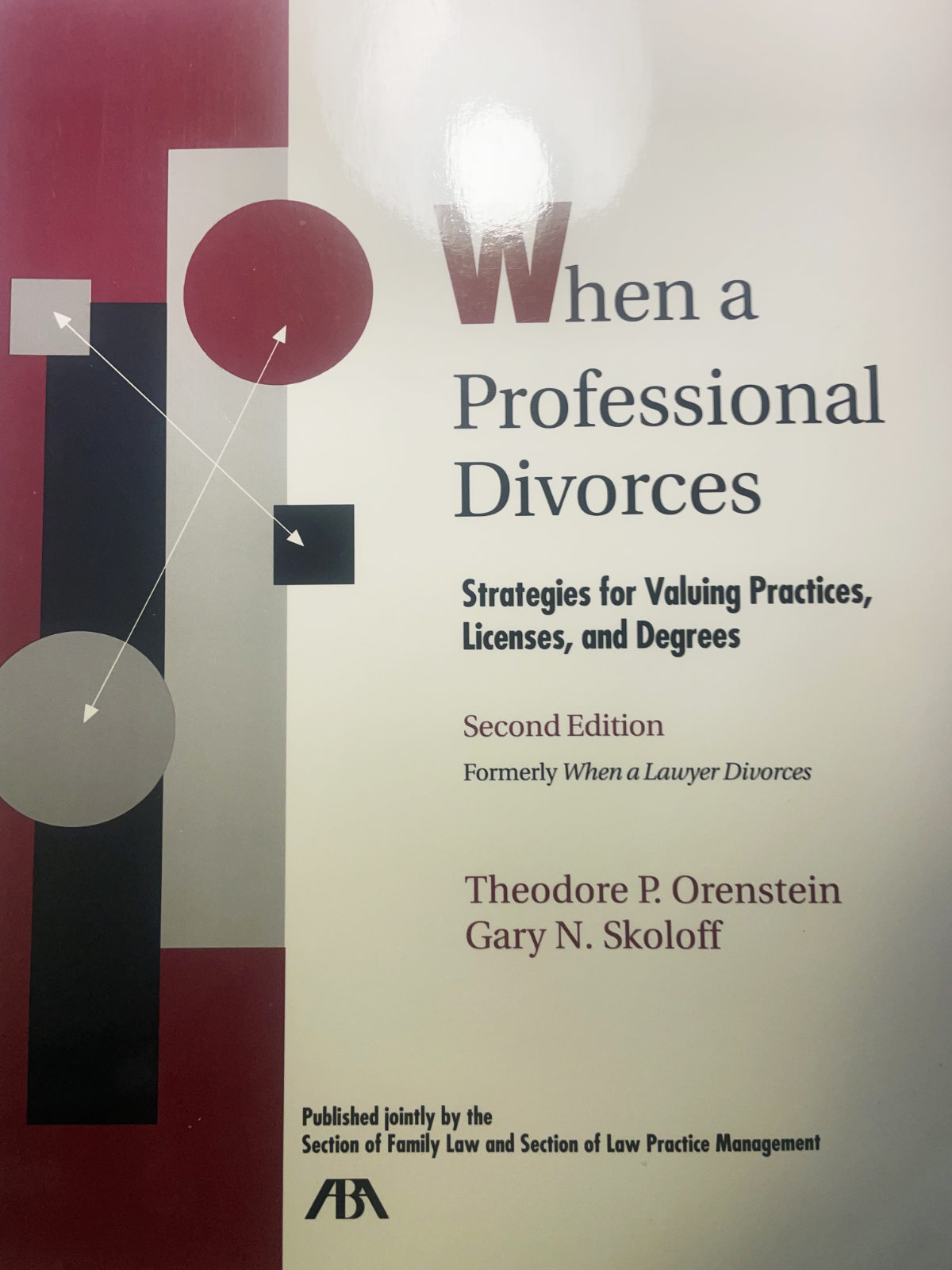
When a Professional Divorces: Strategies for Valuing Practices. Licenses and Degrees, co—author with Gary N. Skoloff, American Bar Association Press, 1994
Law Practice Management for the Solo and Small Office Practitoner, Practicing Law Institute. 1990 Chapters on "Practical Billing Techniques" and "The Setting, Billing and Collection of Fees"
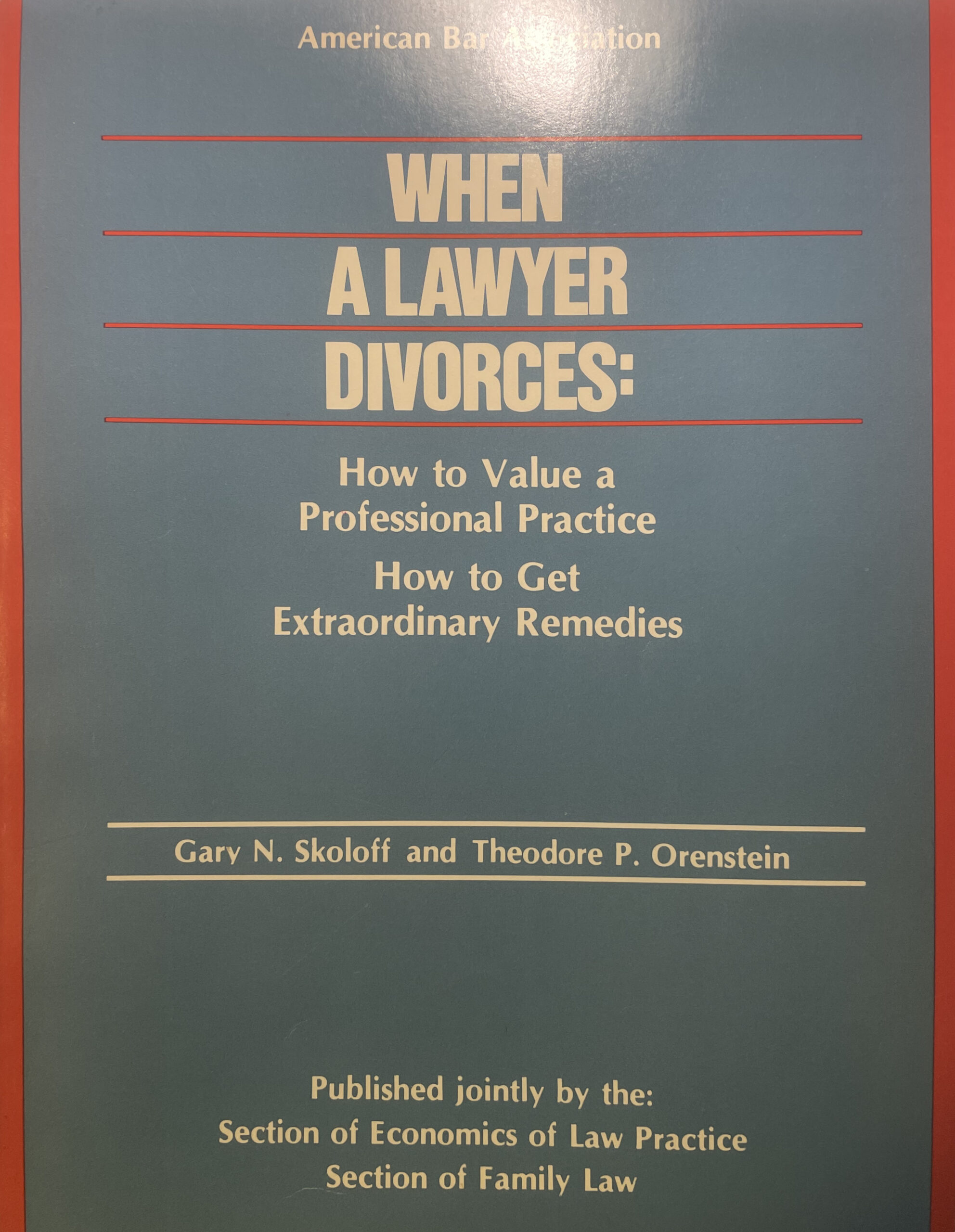
When a Lawyer Divorces: How to Value a Professional Practice — How to Get Extraordinary Remedies, co-author with Gary N. Skoloff, American Bar Association Press, 1986
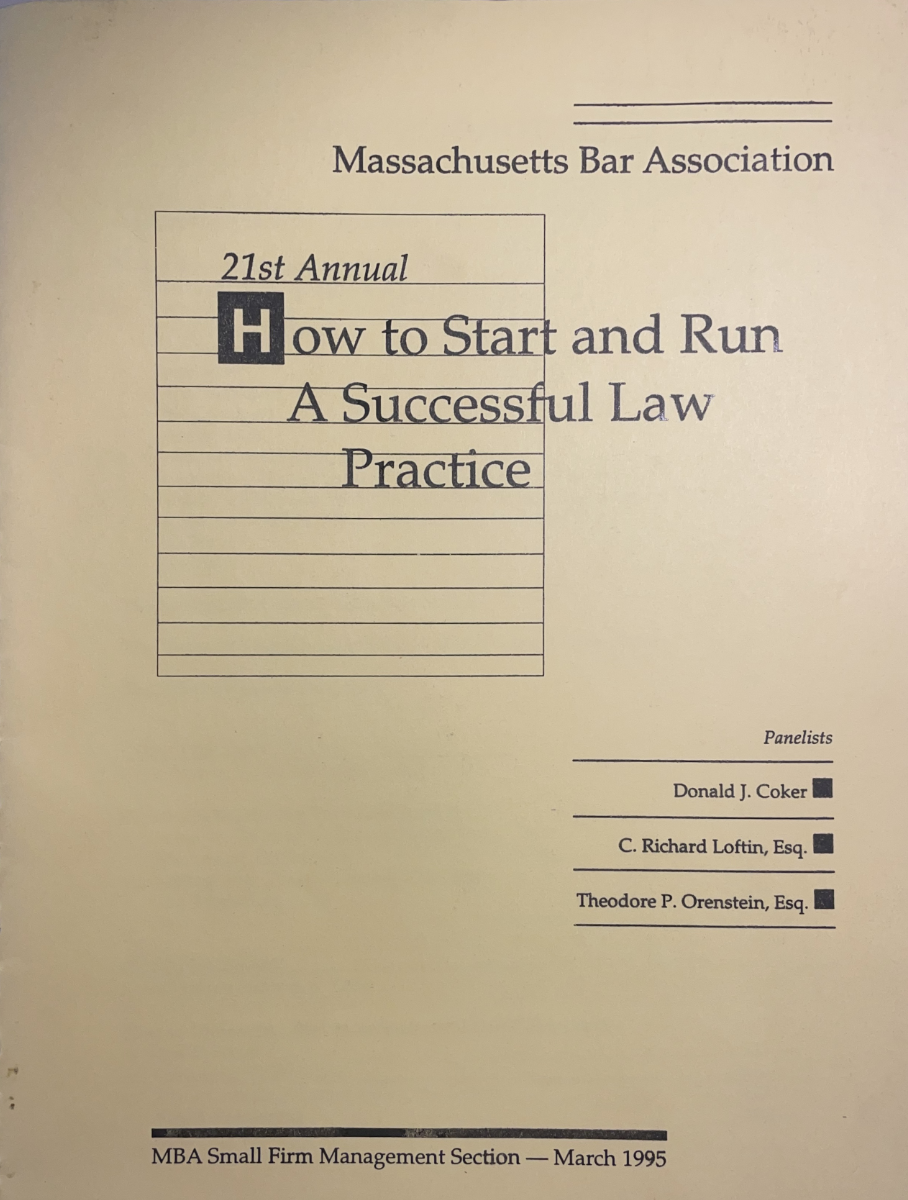
How To Start and Run a Successful Law Practice, Massachusetts Bar Association, 1995
Family Law in Massachusetts, co-author, published by the Legal Education Institute, Inc., 1988.
Massachusetts Family Law Manual, published by Massachusetts Continuing Legal Education,1991 Chapter on “The Client Interview”
Survival Skills for Practicing Lawyers, American Bar Association Press, 1994.
Articles in periodicals
- “Hints on Creating a New Law Practice”, Massachusetts Lawyers Weekly, March 31, 1975.
- “J. Harris Morgan’s Famous Form Freezer Simplified.”, Massachusetts Lawyers Weekly, April 21, 1975.
- “Simple Methods To Improve Collection of Fees”, Massachusetts Lawyers Weekly, April 19, 1976.
- “Hiring a Paralegal Can Increase A Lawyer’s Income”, Massachusetts Paralegal Association Newsletter , May-June 1980.
- “Creative Compensation Furthers a Firm’s Goals”, Law Office Management magazine, 1981.
- "Hiring a Paralegal Will Increase a Lawyer's Income”, The National Law Journal, February 1982
- “The Crisis in Legal Fees”, Section News of the Massachusetts Bar Association Law Practice section, February 1982.
- “Can a Paralegal Clear More Than $15,000 a Year For You?”, National Law Journal, March 1, 1982.
- “A Time For Keeping Time”, National Law Journal, March 1982.
- “Pooling Management Expertise” The National Law Journal, April 26, 1982.
- “How To Start a Law Practice”, The New Dictum, Suffolk University School of Law, a series of articles published monthly throughout the 1982-83 school year.
- “The Art of Fee Collecting” The National Law Journal, July 26, 1982
- “Can a Paralegal Clear More Than $15,000 a Year For You?”, At Issue, A publication of the San Francisco Association of Legal Assistants, April, 1982.
- "The Art of Fee Collecting", Cleveland Bar Journal, November 1983
- “A Spring Guide to New Ideas in Legal Management Techniques by Massachusetts Lawyers Weekly”, Law Office Management magazine, February, 1983
- “Paralegals Are Profitable to Clients and Lawyers”, Law Office Management published by Massachusetts Lawyers Weekly, February, 1983.
- “The Great Art of Fee Collecting”, Law Office Management 1983 issue of Massachusetts Lawyers Weekly, 1983.
- “Delegating Effectively to a Paralegal”, Legal Economics, the magazine of the American Bar Association Section of Economics of Law Practice, January/February, 1984
- “Delegating Effectively to a Paralegal”, The Paralegal, published by the National Paralegal Association, July/August 1984.
- "Practical Billing Techniques", Legal Economics, the magazine of the American Bar Association Section of Economic of Law Practice July/August 1985
- "Conducting a Firm Retreat", American Bar Association Journal, July, 1985
- “Potpourri of Practice Tips For Attorneys New and Old” New Hampshire Bar Association Mid-Winter Meeting program 1987.
- “Mental Health Experts: From Couch to Courtroom”, Family Advocate, The Journal of the American Bar Association Family Law Section, Winter 1987.
- “The Graph of Gratitude” Family Advocate magazine of the American Bar Association, Spring 1989.
- “How To Use Your Billing Methods As A Public Relations Tool” American Journal of Family Law, Spring 1991.
- “The Client Interview”, Massachusetts Family Law Manual published by Massachusetts Continuing Legal Education, 1991.
- Law Firm Marketing in the 90’s, American Law Institute/American Bar Association Videotape, June 1992
- “Client-Friendly Billing Practices”, The Practical Lawyer, American Law Institute/American Bar Association, March 1993
- “Eight Steps to Satisfying Clients” Law Practice Today, published by the American Bar Association Law Practice Management Section, 1994.
- “Hints on Creating A New Law Practice” Massachusetts Lawyers Weekly March 31, 1995.
- “Effective Use of Paralegals” The Magazine of the Massachusetts bar Association Substantive Law sections, Summer 1995
Awards
- American Bar Association Young Lawyers Section Comprehensive Award of Achievement 1976-77.
- American Bar Association Young Lawyers Section Award of Achievement For Most Outstanding Project 1976-77.
- Recognized by Massachusetts Lawyers Weekly “for contributions to improving justice,” September 20, 1976.
- President’s Award of the Massachusetts Bar Association For Extraordinary Personal Dedication And Service To This Association, To The Legal Profession, And To The Public, June 17, 1985
- The Divorce Center Award, 2002
Teaching
- “How To Create a Clientele”, Practical Skills Course, Massachusetts Continuing Education, 1973.
- Law Career Day speaker at Suffolk University Law School, April 1977.
- “How To Run a Law Office” Massachusetts Academy of Trial Attorneys, Boston College Law School, March 10, 1979.
- “Special Evidentiary Problems in Divorce Litigation”, Massachusetts Bar Association Brown Bag Lunch, March 12, 1980.
- Law Office Management Symposia presented by the American Bar Association at the Boston Park Plaza Hotel, October 23, 1980.
- “Profit Planning Workshop”, joint presentation of the American Bar Association and Massachusetts Bar Association, November 14, 1981.
- “How to Establish Your Own Law Practice”, presented by the New England School of Law, March 1982.
- “Toward More Effective Working Relationships Between Therapists and Lawyers in Divorce and Child Custody Decisions”, Massachusetts Psychological Association, Boston, June 4, 1982.
- Panelist at the Massachusetts Bar Association’s Summer Session at the Sheraton Boston Hotel, June 17, 1983.
- “Increase Your Income Without Increasing Your Fees”, Massachusetts Bar Association Second Annual Fall Educational Conference, Sheraton Tara Hotel, October 15, 1983.
- “The Nuts and Bolts of Setting Up Office Systems” at “The Big Decision, Should I Open My Own Office?”, Massachusetts Bar Association Young Lawyers Division , Boston, March 17, 1984.
- “The Economics of Delegating Legal Work”, “Maintaining Quality Control of Delegated Work Through Written Systems”, presented by Massachusetts Association of Legal Secretaries and Massachusetts Paralegal Association, April 28, 1984.
- “Automation for the Sole Practitioner” and “Law Firm Planning” American Bar Association Annual Meeting, Chicago, August 1984.
- “Key to Increasing Profits” Massachusetts Academy of Trial Attorneys, Boston, May 22, 1985.
- “Rights and Remedies of The Spouse Re: Professional Degrees and Licenses”, Legal Educational Institute, Toronto, Canada, June 27, 1986.
- “Professional Practices and Licenses in Equitable Distribution with a Focus on Mass. Law after the Drapek Case”, American Academy of Matrimonial Lawyers, Massachusetts Chapter, Boston, April 2, 1987.
- “Conducting a Firm Retreat”, American Bar Association Annual Meeting, San Francisco, August 1987.
- “Pricing, Billing and The Costs of the Delivery of Legal Services”, New Hampshire Bar Association, March 3, 1988.
- “Family Law in Massachusetts” Legal Education Institute, Boston and Springfield, December 1988.
- “Law Office Management for The Solo/Small Office Practitioner.” and “Practical Billing Techniques”, Practicing Law Institute, New York City, April 15, 1989.
- “Hot Tips From The Experts”, American Bar Association Annual Meeting, Family Law Section, August 11, 1991.
- “Weapons of Divorce” The Divorce Center, May 19, 1992.
- “How to Get Paid For The Work You Do”, Massachusetts Bar Association Annual Meeting, June 5, 1992.
- “Bankruptcy and Family Law Issues”, Massachusetts Bar Association, October 2, 1993.
- “Maximizing Financial Aid for College”, Massachusetts Bar Association, December 8, 1993.
- “Third Party Practice in Divorce Cases”, Massachusetts Bar Association, September 24, 1994.
- “ New Developments in Mass. and Federal Statutes and Cases”, Massachusetts Bar Association Family Law Weekend, September 16, 1995.
- “The Attorney-Paralegal Team”, Massachusetts Continuing Legal Education, December 14, 1995.
- “How To Start and Run A Successful Law Practice”, Massachusetts Bar Association, yearly from 1975 to 1996.
- “Alimony-The Supreme Judicial Court Speaks-Major Changes?”, Massachusetts Bar Association, September 28, 1996.
- “Domestic Violence And Its Impact On The Family”, The Divorce Center, July 16, 1997.
- “Legal Overview of Divorce: What Can I Expect from the Process?”, The Divorce Center, October 22, 1997.
- “The Divorce Agreement”, The Divorce Center, September 28, 1999.
- “How To Choose and Work With Your Lawyer”, The Divorce Center, January 11, 2000.

